











The common ways a story changes
These are patterns to recognize, not labels to pin on anyone after one argument. They overlap, and you don't need to name which one you're facing.
Flat denial. "That never happened." "I never said that." Answer once, then move on: "I remember it differently. Here's what I need now."
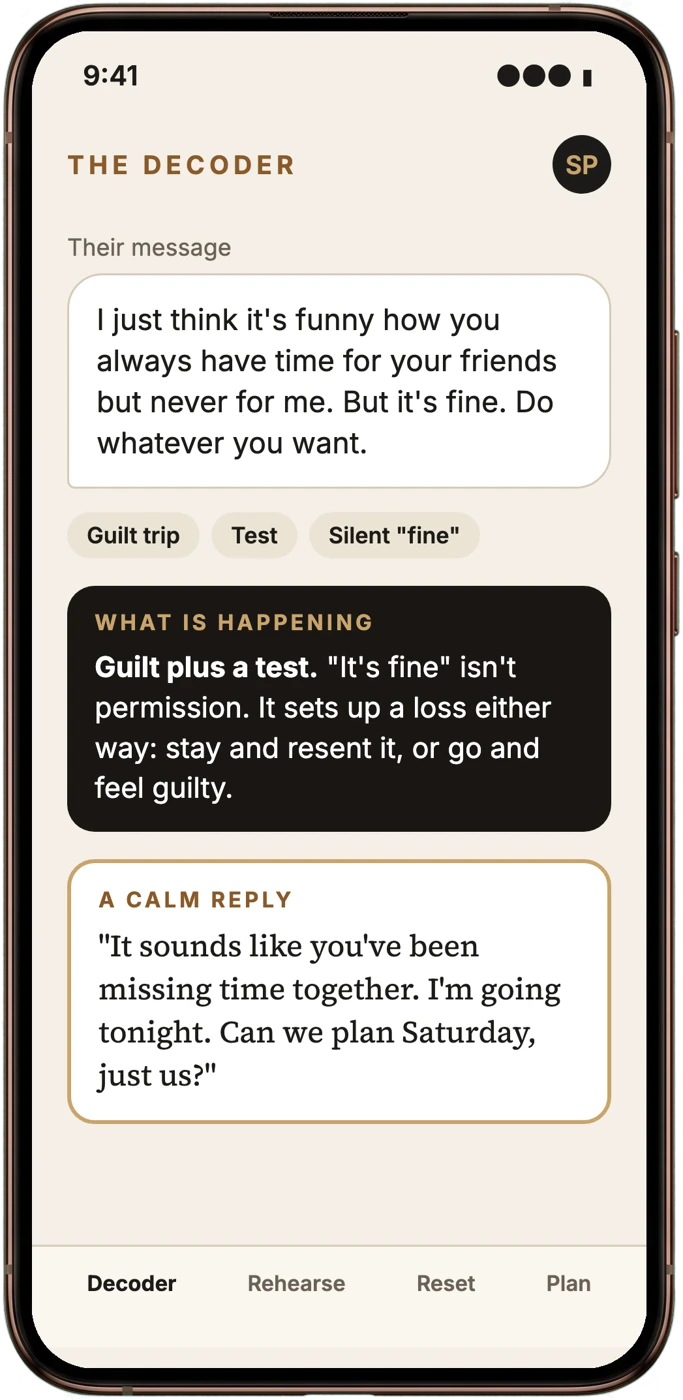
Minimizing. "It was a joke." "You're too sensitive." They don't deny it happened. They deny it matters. You don't need them to agree it hurt: "Maybe it was meant as a joke. I'd still like you to stop."
Blame-shifting. "You made me do it." "If you hadn't pushed, I wouldn't have yelled." Separate your part from theirs: "I'm happy to talk about what I said. I'm not taking responsibility for what you did."
Fog. Long, circling answers. A new topic every time you get close to the point. Something you did in 2014. Pick one short sentence and keep coming back to it: "I want to come back to my question. Will you pay me back by Friday?"
From Chapter 8, page 79.